The University of Antique (UA) was recognized by Capiz State University (CAPSU), the Regional Program Lead of the Regional Agri-aqua Innovation System Enhancement (RAISE) Program in Western Visayas, for its valuable contributions, commitment, and active partnership in advancing research, technology transfer, and commercialization across the region.
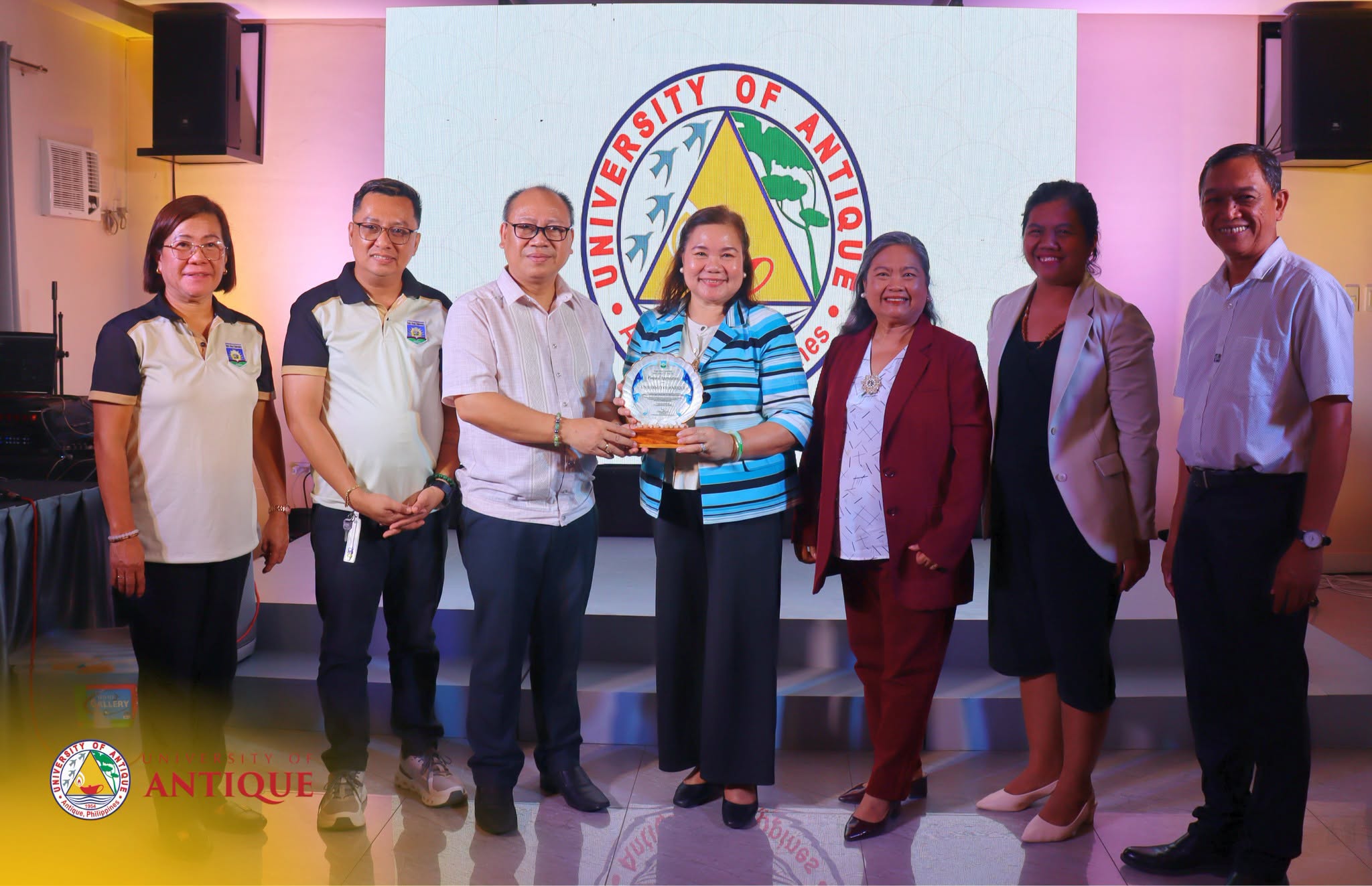
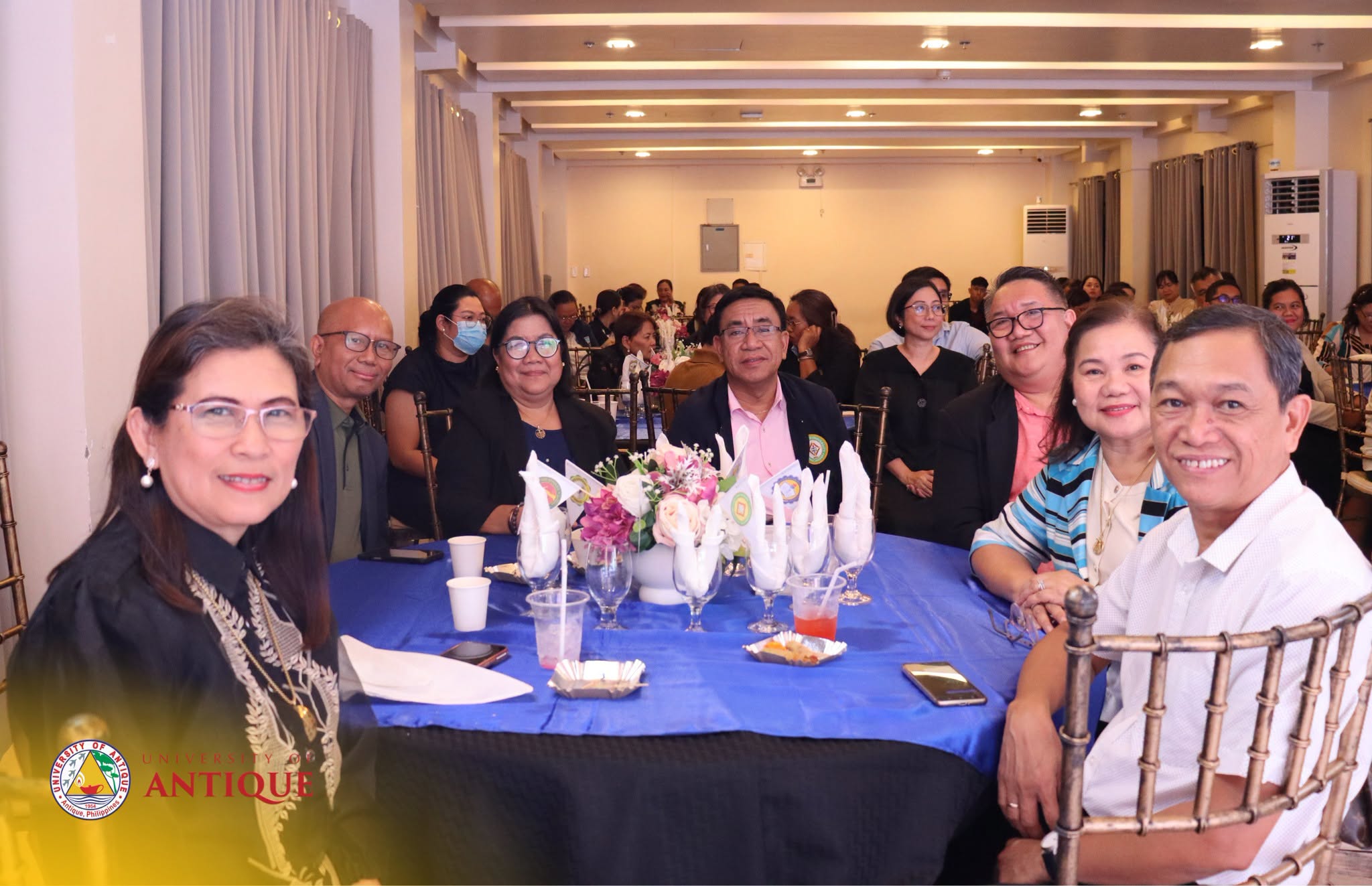
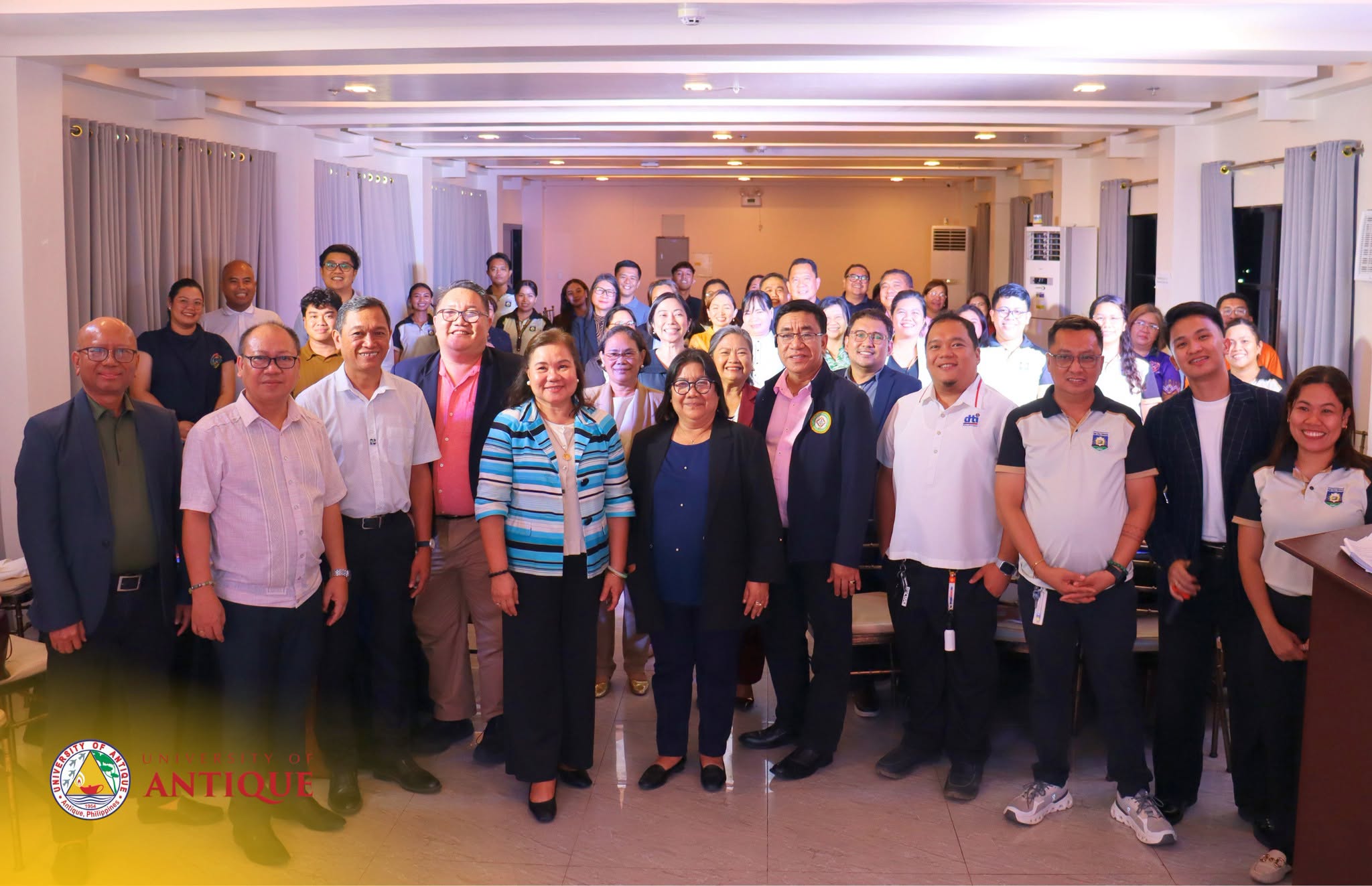
The recognition was presented during the RAISE Presidents’ Summit and Stakeholders’ Night held on November 5, 2026, at Aura Condotel, Roxas City, Capiz, as part of PAGTUKIB 2026: Institutionalizing CAPSU’s Innovation Ecosystem: Building a Strong Foundation for Sustainable Growth.
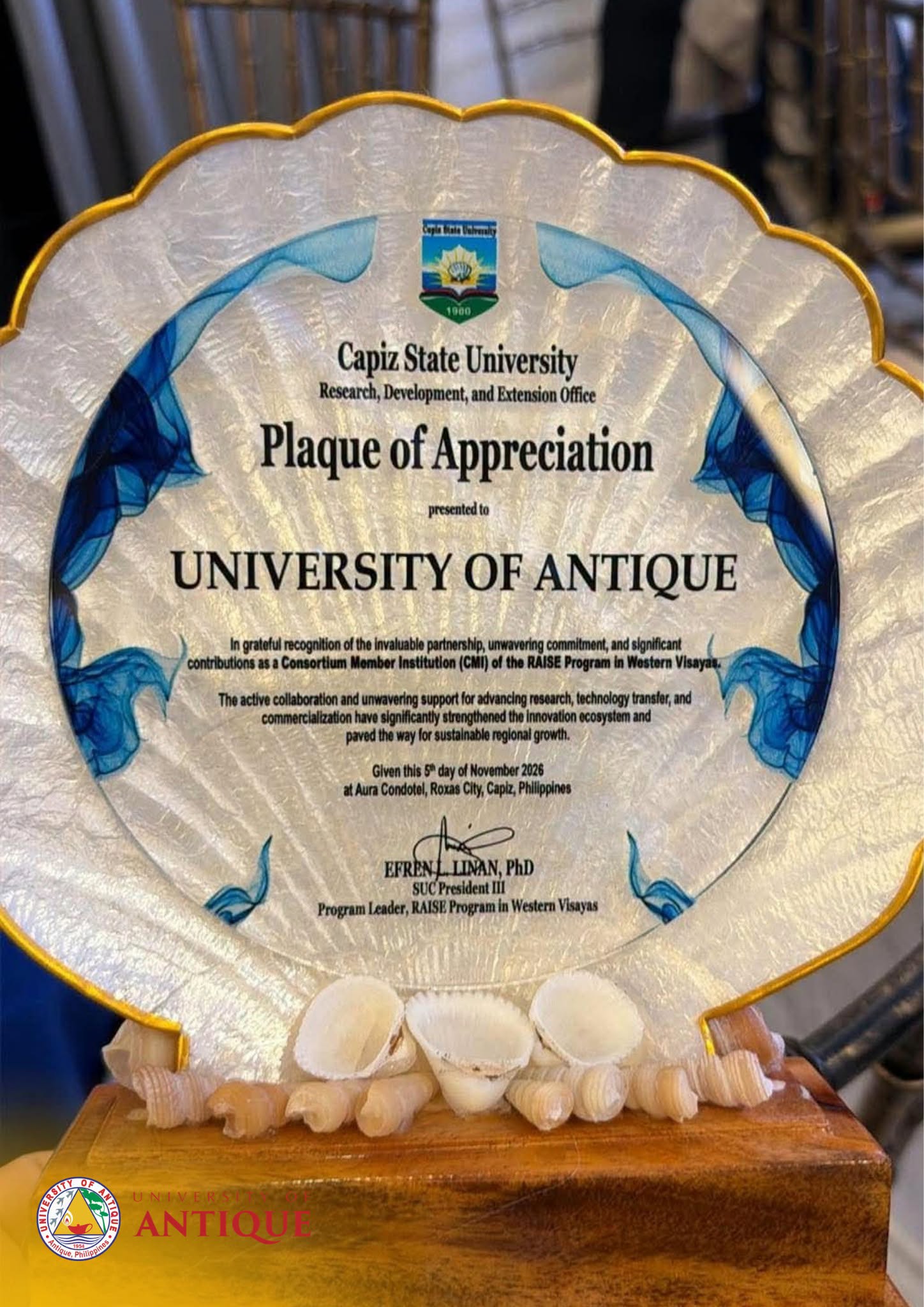
UA received a Plaque of Appreciation in grateful recognition of its “invaluable partnership, unwavering commitment, and significant contributions as a Consortium Member Institution (CMI) of the RAISE Program in Western Visayas.” The plaque also recognized UA’s active collaboration and support in advancing research, technology transfer, and commercialization, contributing to the strengthening of the regional innovation ecosystem.
Representing the University of Antique during the event were Dr. Godelyn G. Hisole, University President, Dr. Jelyn O. Alentajan, Vice President for Research, Extension, and Innovation, and Dr. Debbie Jean S. Riego, Research Director and UA-DOST-PCAARRD RAISE IP-TBM Project Lead.
The recognition reflects UA’s continuing commitment to building meaningful partnerships and strengthening its role in the Western Visayas research and innovation ecosystem. Through the RAISE Program, UA continues to pursue opportunities for collaboration, technology development, intellectual property management, technology transfer, and commercialization toward innovations that create meaningful impact for communities and stakeholders.
UA also expresses its sincere appreciation to Capiz State University and the RAISE Western Visayas Consortium for the recognition and for the continued partnership in advancing a stronger, more collaborative, and sustainable regional innovation ecosystem.
𝐶𝑜𝑛𝑡𝑟𝑖𝑏𝑢𝑡𝑒𝑑 𝑎𝑟𝑡𝑖𝑐𝑙𝑒 𝑎𝑛𝑑 𝑝ℎ𝑜𝑡𝑜𝑠 𝑓𝑟𝑜𝑚 𝑅𝑒𝑠𝑒𝑎𝑟𝑐ℎ 𝑈𝑛𝑖𝑡